
Is Your Motorcycle Windshield Fitment Right for Your Bike?
Posted by Editorial Team on 2026 Nov 28th
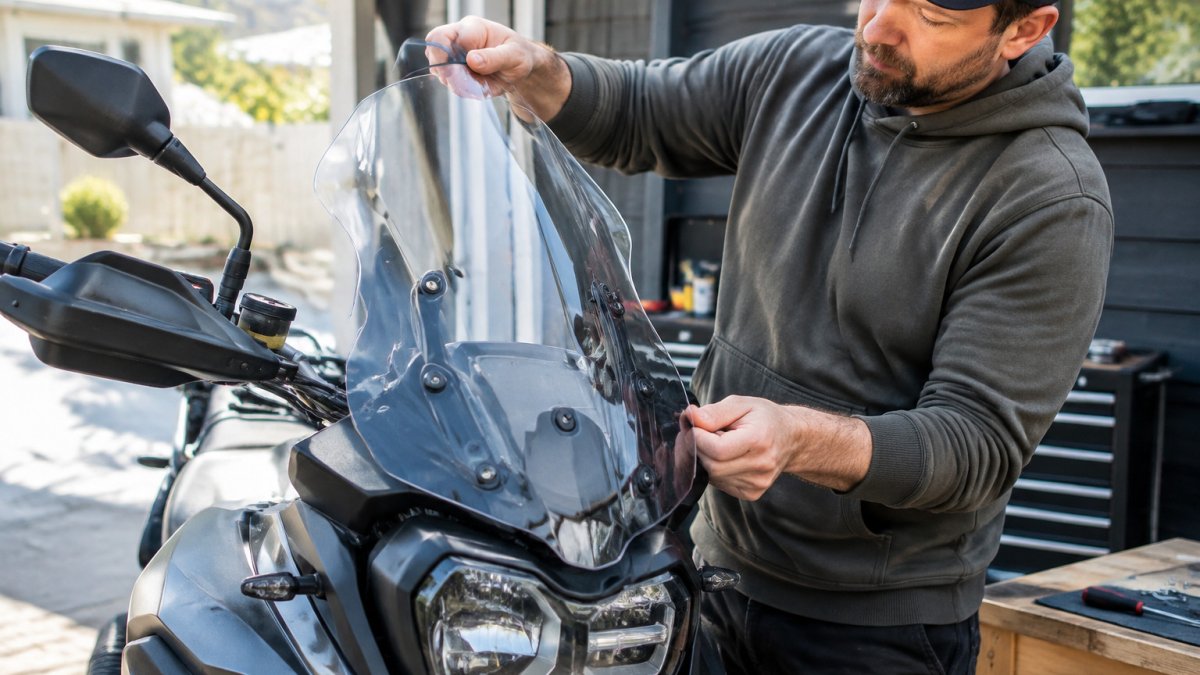
Last Updated: 28 November 2026
Quick Summary
Motorcycle windshield fitment is determined by matching the screen to your exact make, model, model year and trim, then confirming it mounts to your bike's existing fixing points. Check the product's listed fitment notes before ordering, since universal screens often need modification. Confirm the mounting method and clearance at the headlight and instruments.
- Confirm your exact make, model, year range and trim before ordering any screen.
- Check whether the screen bolts to existing mounts or needs brackets, spacers or drilling.
- Fitment can change partway through a model year, so compare the fairing shape against listed applications.
- Measure seated height and sternum position to choose a screen height that suits your riding position.
- Polycarbonate resists impact better, while acrylic offers clearer optics but is more brittle.
Table of Contents
- How Do I Know Which Motorcycle Windshield Fits My Model?
- Model-Specific Fitment Lookup: Make, Model, Year and Trim
- Motorcycle Windshield Compatibility Across Model Years and Trims
- How to Measure Motorcycle Windshield Height and Rider Fit
- Polycarbonate vs Acrylic: Windshield Materials Compared
- Motorcycle Windshield Mounting Hardware and Brackets
- Motorcycle Windscreen Installation: Step-by-Step Checks
- Troubleshooting Buffeting, Turbulence and Wind Noise
- Choosing Your Windshield Before You Order
- Frequently Asked Questions
Motorcycle windshield fitment by model is the single biggest factor in whether a new screen improves your ride or becomes an expensive mistake. A common frustration among riders is ordering a screen that looks right, then finding it needs drilled brackets or spacers that were never mentioned. Transport Canada motor vehicle safety guidance is a useful starting point for understanding how vehicle equipment is regulated in Canada, but for aftermarket fitment you still need to check the specifics of your own bike. Below, we walk through how to confirm fit, measure your riding position, weigh materials, and avoid the installation problems that catch most DIY riders off guard.
How Do I Know Which Motorcycle Windshield Fits My Model?
A motorcycle windshield fits your model when it mounts to your bike's existing fixing points, clears the headlight and instruments, and matches your make, model and model year. Start with the manufacturer's listed fitment for your exact bike, then confirm the mounting method before you buy.
Universal screens are sold as a catch-all, but they rarely mount cleanly without modification. A model-specific screen is designed around the bike's own brackets and clearance. Check whether the product page names your year range, and read the fitment notes rather than assuming a screen labelled for your brand will suit your model.
Look for these details before ordering:
- The exact make, model and year range the screen is designed for
- Whether it bolts to existing mounts or requires additional hardware
- Any mention of spacers, drilling or custom adjustment
- Headlight and instrument clearance at the stated height
A common mistake is trusting a general "fits most sportbikes" claim. Riders who skip this step often discover the screen sits too close to the instruments or leaves a gap at the fairing edge.
Model-Specific Fitment Lookup: Make, Model, Year and Trim
Fitment depends on the combination of make, model, year and trim, because a single model can change its fairing or mounting points partway through a production run. Use the table below as a checklist to record what you need to confirm for your bike before you buy.
| Fitment Check | What to Confirm | Why It Matters |
|---|---|---|
| Make and model | Exact model name from your registration | Brands reuse names across different frames |
| Model year | Year range listed on the product page | Fairings change between years |
| Trim level | Standard, S or race-spec versions | Trim changes can alter the fairing shape |
| Mounting points | Existing bolts or extra brackets needed | Determines whether drilling is required |
| Clearance | Gap to headlight and instruments | Prevents rubbing and glare |
Confirm the trim on your own bike rather than relying on memory, since the same model is sometimes sold in several specifications. If the product page does not list trim, ask the seller directly before ordering.
Motorcycle Windshield Compatibility Across Model Years and Trims
Compatibility can change from one model year to the next, even when the bike looks identical from the side. The usual causes are a revised fairing mould, a changed bracket part number, a repositioned instrument cluster or a mid-generation facelift that alters headlight height. Any one of these can make a screen that fitted last year's bike a poor match for this year's.
This is where riders often get caught. A screen listed for a multi-year range may fit the early bikes in that range and not the later ones, or it may fit the standard trim but not a sport or touring variant. When a listing gives a year range, check whether it names specific revisions and whether the seller notes exceptions.
Work through these checks for your own bike:
- Production date versus model year: a bike built late in one calendar year can be registered as the next model year, so confirm the production date on the frame plate or VIN rather than relying on the registration alone.
- Mid-generation changes: many models receive a fairing or cockpit update partway through a run without a new model name. Compare the shape of the fairing around the headlight and the instrument surround against photos of the screen's listed applications.
- Trim differences: standard, sport and touring trims can use different screens, different bracket heights or different cockpit layouts. Confirm the trim on your own bike rather than relying on memory.
- Bracket part numbers: where the seller lists a bracket part number, compare it with the number on your bike's existing mounts. A matching screen with a mismatched bracket is a common source of returns.
- Accessory interference: hand guards, bar risers, GPS mounts and taller mirrors can all reduce clearance even when the screen itself is correct for the model.
Treat a year range as a starting point, not a guarantee. It is worth contacting the seller with your exact year, trim and any accessories before you buy. A short message with a photo of your cockpit usually resolves the question faster than a return.
Watch out: a screen that fits the mounting points can still foul the instruments or the brake and clutch levers at full lock, so check clearance with the bars turned both ways before you tighten anything down.
How to Measure Motorcycle Windshield Height and Rider Fit
Windshield height should be chosen around where the airflow hits your body, not just what looks right on the bike. Measure your own riding position, then compare the result with the screen's stated height.
Start by sitting on the bike in your normal riding position, with your hands on the bars and your feet on the pegs. Ask someone to measure from the seat to the centre of the headlight, which gives you a reference point. Next, measure from the top of the fairing to your sternum and to your helmet's lower edge.
These measurements help you decide whether a taller or shorter screen suits you:
- Seated height to the centre of the headlight: your baseline for the bike
- Sternum to the top of the fairing: shows how much of your chest the screen covers
- Helmet line: a screen that stops at the helmet's lower edge usually gives the best balance of protection and airflow
A taller screen directs air over the helmet and reduces buffeting on the chest, but it can increase turbulence around the helmet at speed. A shorter screen gives a cleaner view and less turbulence, with less upper body protection. Choose based on your typical speeds and how you normally ride.
Polycarbonate vs Acrylic: Windshield Materials Compared
Polycarbonate and acrylic are the two materials you will most often see, and each has clear trade-offs for a motorcycle screen.
Polycarbonate is far more impact resistant. It handles stones, debris and minor drops better, which makes it the usual choice for riders who cover long distances or ride on rough roads. Its main drawbacks are that it scratches more easily and it can yellow over time with UV exposure, so a protective coating helps.
Acrylic offers better optical clarity and scratch resistance at a lower weight, which suits riders who value a clean view. It is more brittle, though, and it is more likely to crack or shatter under a hard impact.
| Material | Strengths | Weaknesses | Best For |
|---|---|---|---|
| Polycarbonate | High impact resistance | Scratches more easily, can yellow | Long-distance and rough-road riding |
| Acrylic | Clear view, scratch resistant | More brittle under impact | Riders prioritising optical clarity |
Neither material is automatically better. Match the choice to how and where you ride.
Motorcycle Windshield Mounting Hardware and Brackets
The mounting hardware decides whether a screen installs cleanly or forces you into modifications, and it is the part of fitment that product pages most often underspecify. Check what the kit includes before you order, and look at the bracket design, not just the screen itself.
Most model-specific screens fall into one of three mounting patterns:
- OEM replacement: the screen reuses the bike's original bolts and grommets with no extra brackets. This is the simplest fit and the least likely to need modification.
- Bracket-assisted: the screen ships with model-specific brackets or spacers that relocate the mounting points to reach the correct height or angle. Fit depends on the bracket matching your exact model and year, not just the screen.
- Adjustable mechanism: some touring and adventure bikes use a sliding or multi-position screen mount. A replacement screen must match the mechanism's fixing pattern and thickness, or it will not clamp securely even if the bolt holes line up.
When you review a kit, confirm:
- Whether all brackets, bolts, washers and grommets are included, and whether any are listed as separate purchases
- The thread size and length of any supplied bolts, and whether they match your bike's existing threads
- Whether the brackets are the correct model-specific design rather than a universal L-bracket
- Whether spacers are needed, whether they are supplied, and what thickness they add
- Whether the screen is compatible with any adjustable mechanism already fitted to the bike
A common pattern is a screen that fits the fairing but arrives without the bracket kit, leaving the rider to source spacers or drill the fairing. Drilling is the step to avoid unless you are comfortable with it, because it is hard to reverse and can weaken the mounting area.
Watch out: mixing bolts of the wrong length can crack the screen at the mounting hole or strip the thread in the fairing, so test-fit every fastener by hand before tightening.
Motorcycle Windscreen Installation: Step-by-Step Checks
Installation is manageable for most weekend riders with basic tools, but it rewards careful preparation. Work on a clean bench, keep the fasteners sorted, and check fit at each stage rather than tightening everything at once.
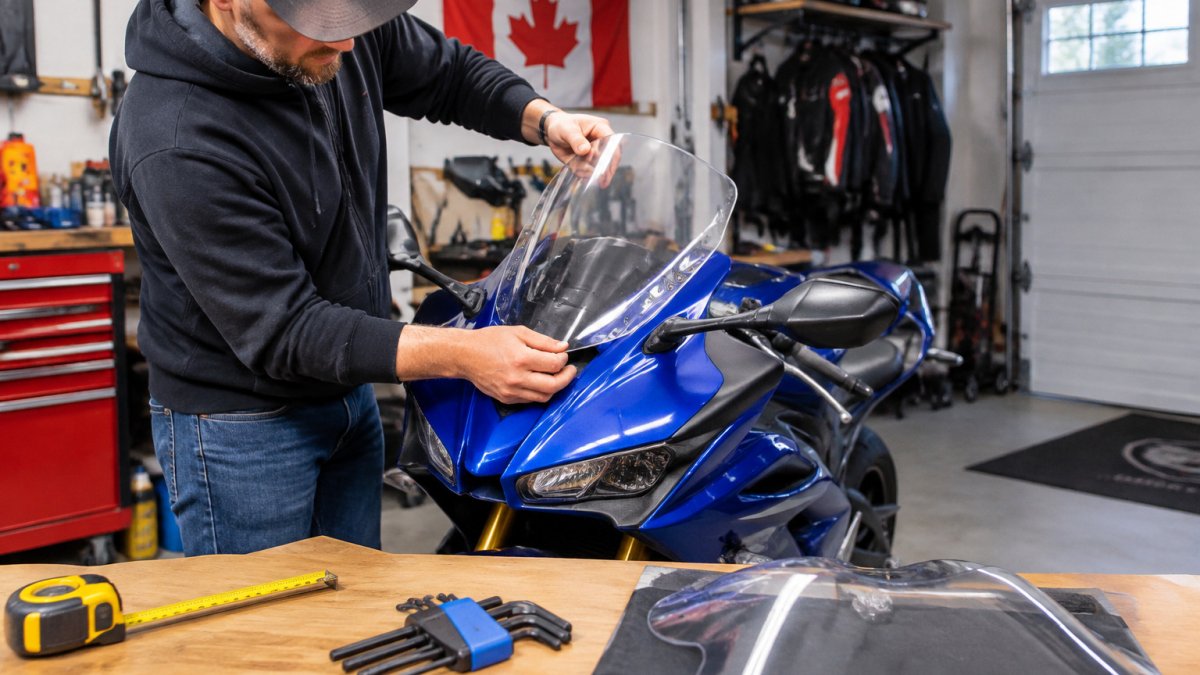
Begin by removing the old screen, if one is fitted, and inspecting the mounting points for damage or corrosion. Lay out the new screen and hardware, then fit the brackets loosely so the screen can still move. Position the screen, check clearance around the headlight and instruments, and only then tighten the fasteners in stages.
Run through these checks before you ride:
- The screen sits square and does not touch the headlight, instruments or fuel tank
- All fasteners are tight and no bolt is cross-threaded
- The screen can be removed and refitted without forcing anything
- The gap at the fairing edge is even on both sides
Take a test ride at low speed first. Listen for rattles and watch for any movement at the mounts, then recheck the fasteners after the first short run.
Troubleshooting Buffeting, Turbulence and Wind Noise
Buffeting, turbulence and wind noise are usually signs that the screen height, angle or mounting is wrong for your riding position, rather than faults in the screen itself.
Buffeting, a rhythmic pressure on the helmet or chest, often appears when the screen is too short for your height or when the screen is set at the wrong angle. Turbulence around the helmet tends to increase with taller screens at speed. Wind noise can come from gaps at the mounting points or from a screen sitting slightly out of line.
Work through the fixes in this order:
- Check the screen is square and the mounts are fully tight
- Confirm the height against your measurements
- Adjust the angle, if the mounting allows it
- Test at a range of speeds to see whether the problem is speed-dependent
If the problem persists after these checks, the screen may simply be the wrong height for your riding position, and changing the height is the most reliable fix.
Choosing Your Windshield Before You Order
Before you buy, bring the earlier checks together into one decision. Confirm your exact make, model, year and trim, measure your seated position, choose a material that suits how you ride, and check the mounting hardware in the kit.
A simple approach is to match the fitment first, then the height, then the material. A screen that fits your bike and suits your posture will serve you better than a more expensive one that needs modification. Pricing depends on quantity, dates and delivery, so check the current price and any delivery options on the BIGNOSE RACING website before you order.
Once you have confirmed fit, height and hardware, the rest of the installation is largely a matter of patience and careful tightening.
Get your fitment confirmed with BIGNOSE RACING and ride with a screen that suits your bike and your riding position.
Frequently Asked Questions
How do I find a windscreen that fits my motorcycle model?
Start with the exact make, model, model year and trim printed on your registration or owner's manual, then search a fitment list that is organised by those same fields. Compare the listed fitment with your bike's headlight shape and fork location, because a screen listed for the same model can still differ between years. If your bike has been modified with a different front end, measure the screen mounting points directly before ordering. Keep your original part number handy when you contact the seller, as it speeds up confirmation of fit.
Do motorcycle windshields fit all years of the same model?
Not always. Manufacturers sometimes change fairing shape, headlight housing or mounting points partway through a model run, and trims such as touring or sport versions can use different brackets. A windshield listed for one model year may need spacers or custom drilling on another. Check the fitment notes for the specific year range, and confirm the mounting holes line up before you assume a screen will bolt straight on.
How do I choose the right motorcycle windshield height?
Height is usually chosen by where you want the airflow to hit your body. Sit in your normal riding position, then look over the screen at your helmet and chest. A lower screen gives a sporty look and more airflow to the chest, while a taller screen directs wind over your helmet. Most riders also consider helmet size and whether they ride in cold or wet weather, since taller screens add more protection but can increase buffeting at speed.
Can I fit an aftermarket windscreen to a standard motorcycle?
In many cases yes, provided the aftermarket screen lists your make, model and year, or uses mounting points that match your bike's existing fairing or bracket system. Some aftermarket screens require the original mounting bracket to be replaced or fitted with adaptors. Check whether the screen is universal or vehicle-specific, and confirm whether any extra hardware is included before you order.
